


ons gebouw
Nederlandse tekst hieronder
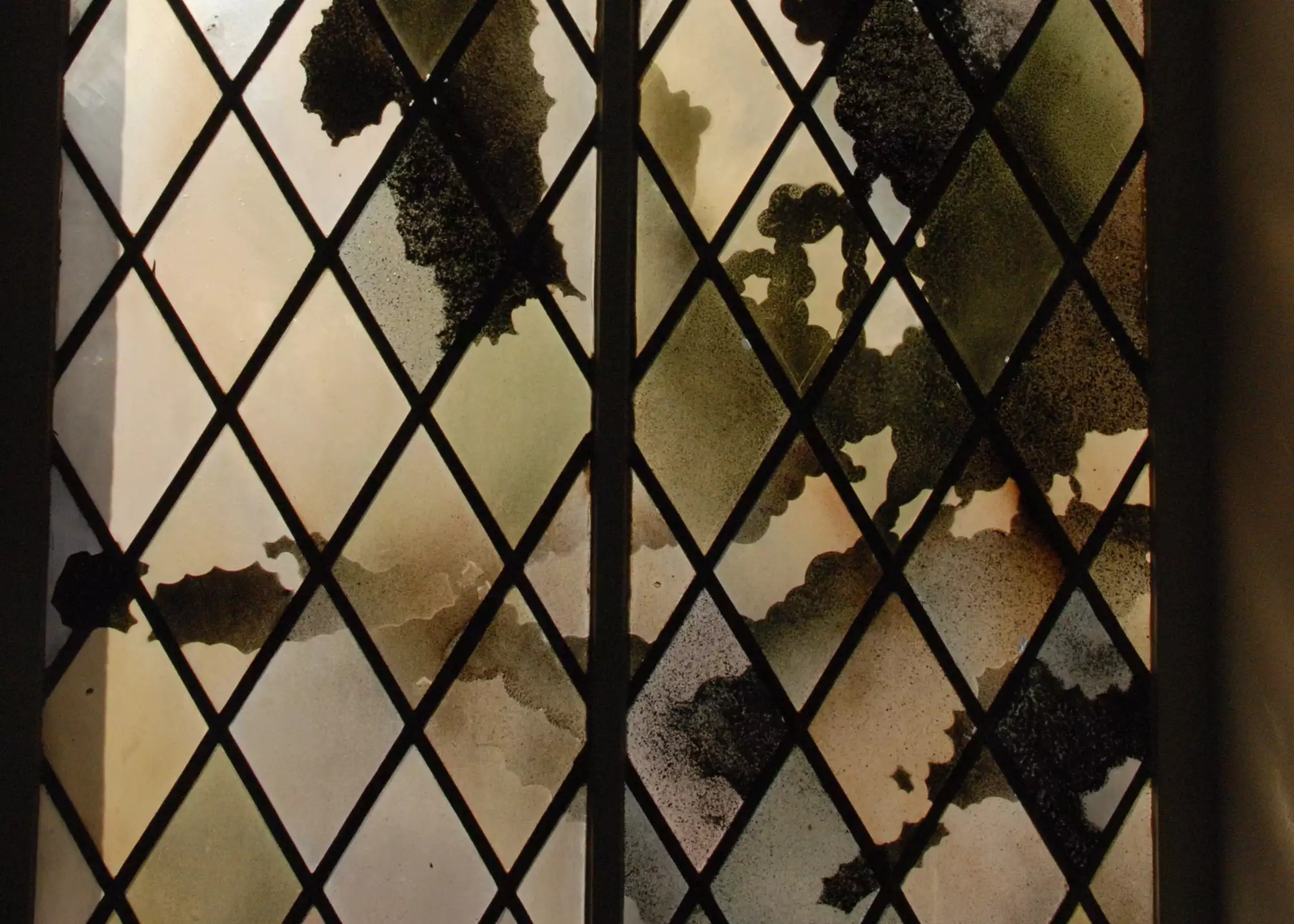
The stained glass windows and the history of the Aula.
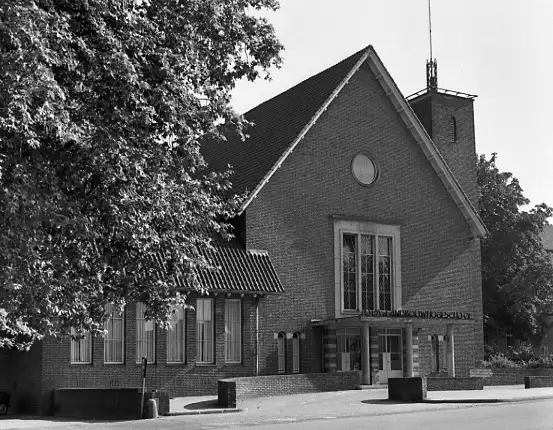
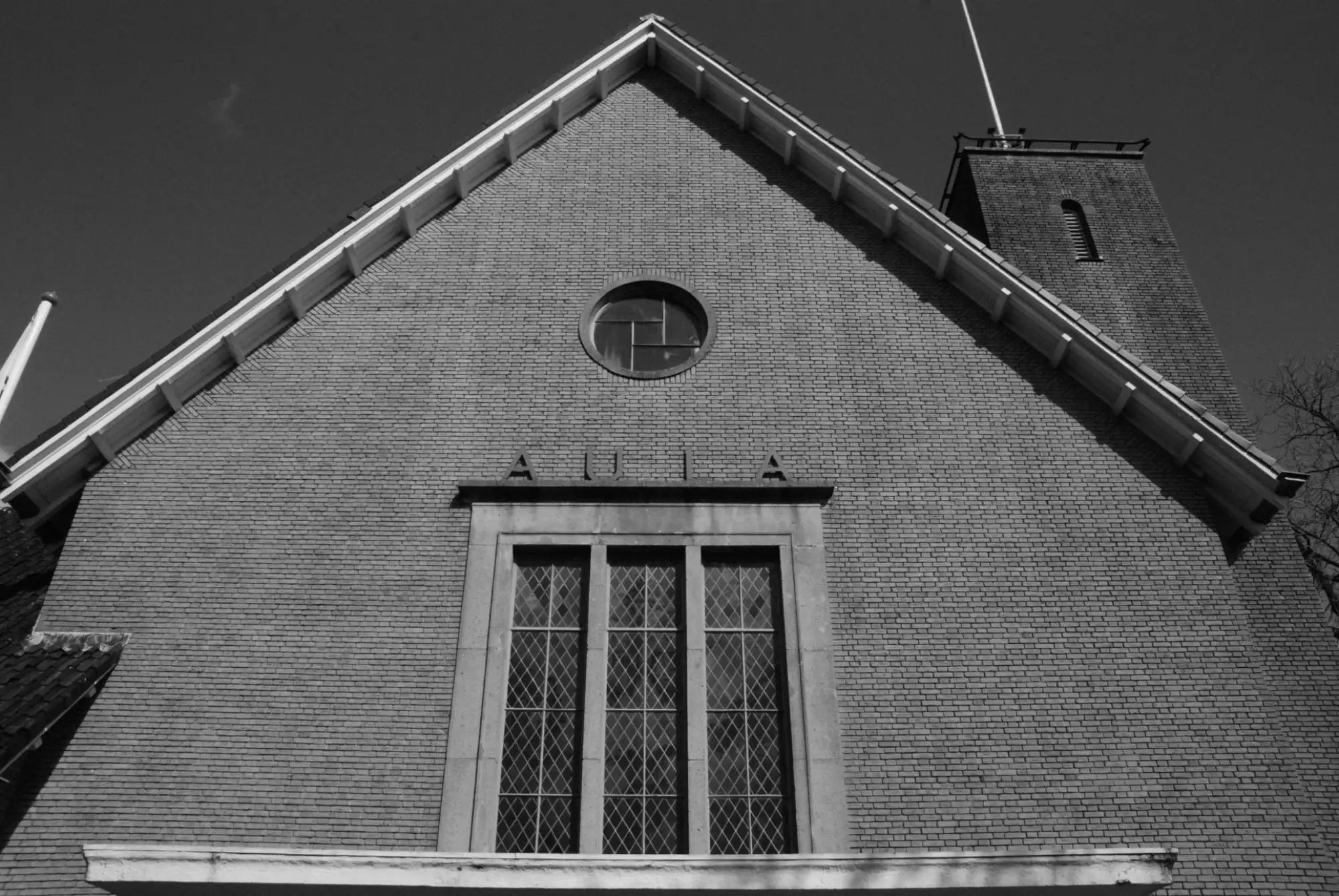
This building is the former Aula of Wageningen University & Research and was completed in 1934. The university used it for all official occasions until 2022. In 2024, the Aula was transformed into Visum Mundi after the university sold the building in 2020.
The initiative for the construction of the Aula was taken by members of the then agricultural college with ties to political parties with strong nationalistic tendencies. Their names are on the plaque, visible on the ground floor, together with a reference to ‘Greater Netherlands’ - an expression that explicitly glorified Dutch colonialism.
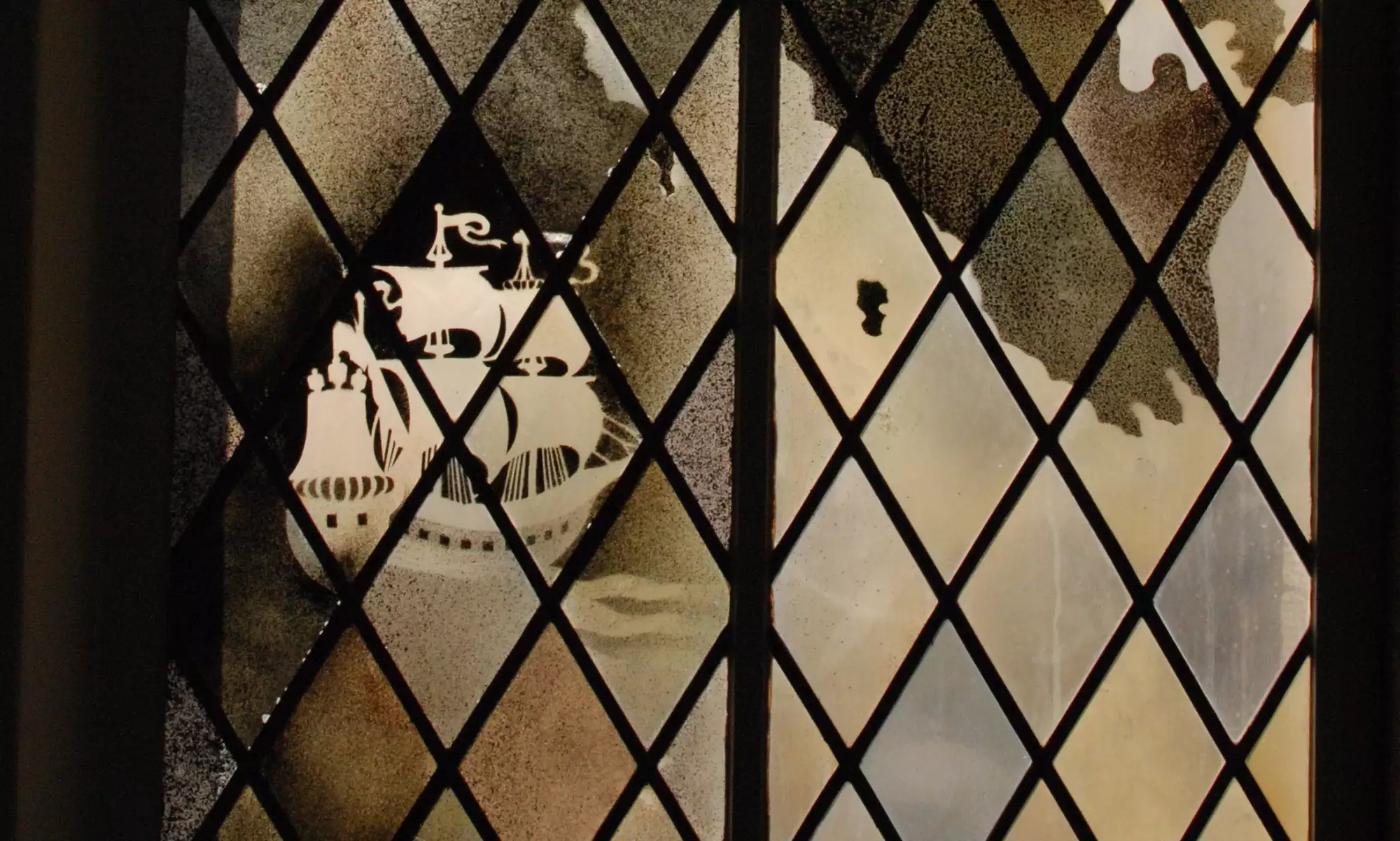
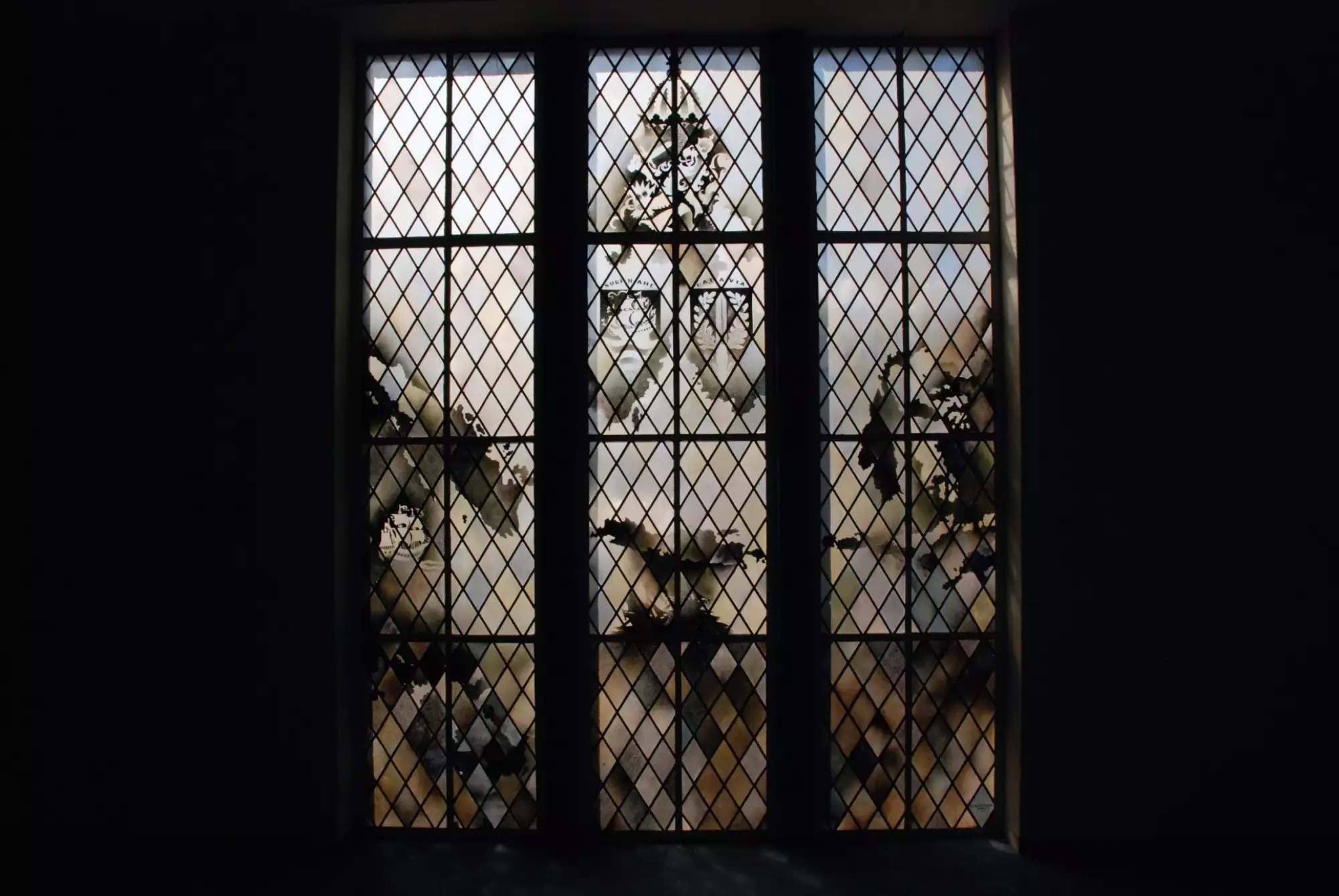
In this stained glass window you can see the coats of arms of Batavia (present-day Jakarta in Indonesia) and Suriname, an image of a ship and the outlines of several islands of the Indonesian archipelago. These images were a recognition in the 1930s of the importance of the colonies for the then Agricultural College Wageningen and for the Dutch economy. It also functioned as an attractive decoration that was intended to attract more students for a colonial career. About 90% of the money for the Aula came from alumni who had made their fortune on plantations. To a lesser extent it came from alumni who worked for the colonial government in the Dutch East Indies.
This building is a silent witness to the colonial past that formed the international connections of the university and the city of Wageningen.
Het glas-in-lood en de geschiedenis van de Aula.
Dit gebouw is de voormalige Aula van Wageningen University & Research en werd voltooid in 1934. De universiteit gebruikte het voor alle officiële gelegenheden tot 2022. In 2024 is de Aula omgevormd tot Visum Mundi nadat de universiteit het gebouw in 2020 verkocht.
Het initiatief voor de bouw van de Aula werd genomen door leden van de toenmalige landbouwhogeschool met banden met politieke partijen met sterke nationalistische neigingen. Hun namen staan op de plaquette die zichtbaar is op de begane grond, samen met een verwijzing naar ‘Groot-Nederland’ - een uitdrukking die expliciet het Nederlandse kolonialisme verheerlijkte.
In dit glas-in-loodraam zie je de wapens van Batavia (het huidige Jakarta in Indonesië) en Suriname, een afbeelding van een schip en de contouren van enkele eilanden van de Indonesische archipel. Deze afbeeldingen waren in de jaren ‘30 een erkenning van het belang van de koloniën voor de toenmalige Landbouwhogeschool Wageningen en voor de Nederlandse economie. Het functioneerde ook als een aantrekkelijke decoratie die bedoeld was om meer studenten aan te trekken voor een koloniale carrière. Ongeveer 90% van het geld voor de Aula kwam van alumni die hun fortuin hadden verdiend op plantages. In mindere mate kwam het van alumni die werkten voor de koloniale regering in Nederlands-Indië.
Dit gebouw is een stille getuige van het koloniale verleden dat de internationale connecties van de universiteit en de stad Wageningen vormde.
References:
Strong nationalist tendencies and Greater Netherlands as glorifying Dutch colonialism
Huygens Instituut
Wikipedia
Van Rinsum, H. (2023), Utrecht University and Colonial Knowledge (pages 235 to 257).
About the typical ship
The design of the ship is consistent with the style of 18th century VOC/WIC ships. See info on the Maritime Museum in Amsterdam.
Importance of Dutch colonies to WUR and Dutch economy
Maat, H. (2001), Science cultivating practice: a history of agricultural science in the Netherlands and its colonies 1863-1986. [PhD thesis]
Project description of Larissa Schulte Nordholt, Postdoc on WUR website
90% of the funding:
This is based on extensive archival work by Larissa Schulte Nordholt (above). She is yet to publish the outcome of the entire research which was commissioned by the executive board of Wageningen University.